I discovered design through Abduzeedo tutorials, learning to create posters in Photoshop. When it came time for college, design wasn't widely recognized as a career path in my environment. I chose engineering, but quickly realized it was more coding than creating.
Rather than settle, I started my own design studio while still in college. Working across graphic design, print, apps, and branding taught me something most designers never get early on: the business of design. Client work showed me how design decisions impact revenue, timelines, and real people's problems.
Despite business success, I felt something was missing. My conversations were always business-focused while my design mentors spoke about users and experiences in ways I couldn't yet articulate. I needed to bridge that gap.
After applying and getting waitlisted by design universities, I joined FractalInk Design Studio in 2017. Learning from design leads there, I developed visual design principles and learned how design operates at enterprise scale. Working on projects for Mahindra, Reliance Finance, and BlueStar taught me to pitch design decisions to C-suite executives and navigate large design organizations.
Late 2017, one of those waitlisted universities called. I moved to Copenhagen in 2018 to study at CIID.dk, learning people-centered design and design thinking. I had the privilege of exploring numerous fields of interaction design including tangible interfaces, AR/VR, and service design.
After completing my studies, I moved to Finland, joining Brella as employee #18 and their first design hire. This was my chance to apply everything I'd learned so far in a fast-moving startup environment.
At Brella, I helped scale the design team from 1 to 5 designers and watched the company grow from 1M to 3M ARR. When COVID hit, we successfully pivoted from a networking app to a full event platform. I learned what it takes to build design culture from zero in a fast-moving startup.
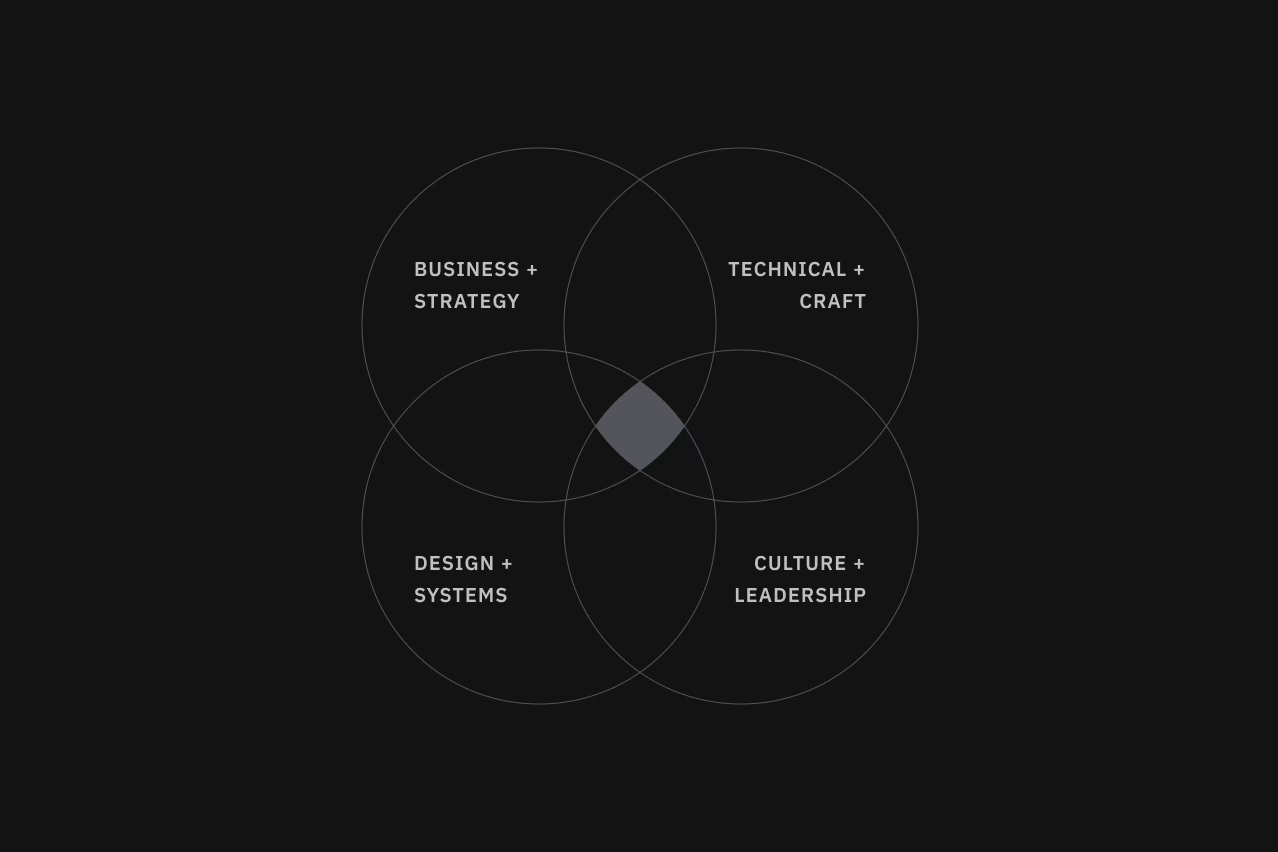
This experience taught me that great design leadership isn't just about managing designers, it's about establishing systems, processes, and cultures that enable good design decisions even when you're not in the room.
Today at IPRally, I'm applying everything I've learned about building design culture to transform how an entire industry thinks about design. I joined as the solo designer and I'm now scaling the team while establishing design foundations.
The journey from Photoshop tutorials to leading design transformation has taught me that great design isn't just about pixels, it's about building systems, cultures, and capabilities that create lasting impact.